

Gloriously Ordinary Sundays - 5th July 2026
I want to spend a little bit of time this week exploring the difference between learning something, working out how to do something, needing to keep checking that you’ve got it right, and having an insight. Bear with me.
It’s been a beautiful week of worlds colliding, little pieces of jigsaw in each part coming together into this weird world of ‘getting back to normal’ (lordy, what is that?) and learning to live with what they tell me is grief.
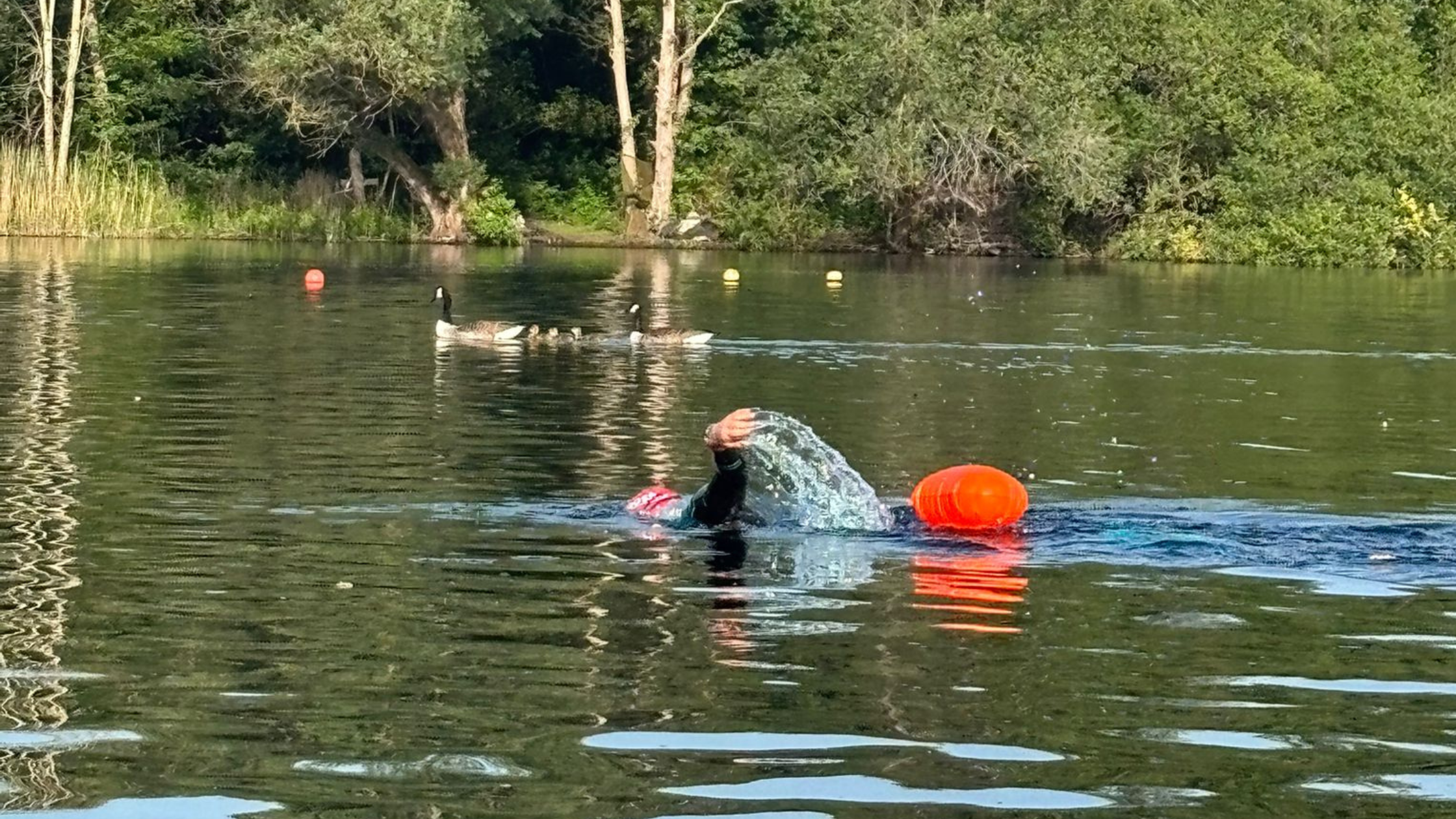
This morning after my swim and whilst enjoying my veggie sausage in a bun (I only do it once a week, I promise), I was chatting to Fiona, who I’d watched swimming beautiful front crawl across the lake - something I just can't seem to learn to do, even after multiple lessons. Any of you who know me a little bit will be unsurprised to know that I've got a low threshold for not being able to do something. I love learning new things, but I expect of myself that I will master that new skill or knowledge quickly and effectively. I think they call it being a perfectionist, and it’s the most annoying impairment I live with.
I’m a strong, head-in-the-water breaststroker, but for the last 10 years I've been trying to learn to do front crawl. The problem I have is that I can't seem to manage to both do the swimming stroke and breathe, so I asked Fiona if she'd had a moment where the breathing just suddenly seemed to work. She laughed, said absolutely and then described the moment where she stopped thinking about breathing and just got on and breathed. That's an insight.
So, if I go back and rewrite that sentence.
‘I've been trying to learn to DO front crawl…’
And therein lies my problem. In all my busyness around the ‘doing’ front crawl bit, I’ve lost sight of the ‘being’ bit. Again, bear with me, and I'll go back to the beginning.
I first learnt about the idea of insight from Jamie Smart. He’s got lots of great podcasts and a couple of books, but he writes this about insight.
‘You’ve had countless realizations and insights over the years; ‘hits’ of fresh new thinking that have aligned your embodied understanding of life more closely with reality. If you’d like a simple metaphor for this, look at the FedEx logo. A white spoon (poetically concealed in the letter ‘e’ in the word ‘Fed’) and a white arrow (hidden between the ‘E’ and the ‘x’ in the word ‘Ex’). These two images have always been part of the ‘reality’ of the logo. You may have looked at them hundreds or even thousands of times. You may not have noticed them until now, but they’ve always been there. The mechanism that takes you from ‘looking’ to ‘seeing’ is realization; a hit of fresh new perception that arrives from beyond your existing model of reality. And once you’ve seen them, you’ll never be able to un-see them.’
Here it is – have a go.

FedEx logo
The dictionary definition of insight is, ‘the ability to have a clear, deep, and sometimes sudden understanding of a complicated problem or situation’.
For me, it is that moment when you go, ‘Okay, THAT’S how it works’
Once you’ve had an insight, you can’t unhave it. It’s like riding a bike or swimming: once you can do it, no matter how long you might not do it, you can’t unlearn it. It becomes the way you see things.
One of my bits of jigsaw for this blog was a LinkedIn post. Amy Sheehan works for Community Catalysts and posted this (I’m going to share quite a long quote):
‘I picture the person who nervously joined our programme with a brilliant idea but no clue where to start. I picture the moment their idea clicked into place. I picture the joy when they realise they’re creating something that matters… The moment they tell me they are starting to support their first person, then their second...
I picture the person who had never written a policy before, who didn’t know what safeguarding really meant in practice, who had never considered how to put safe data protection processes in place... I remember sitting with them, building things step by step, until they felt confident and capable. Watching them realise, “I can do this, and I can do it well.”
And then there’s the power of language. Where someone sees, maybe for the first time, how powerful their words can be. Where language in conversations shifts from “assessment” to “getting to know you,” or from “client” to “person.” Those tiny changes that ripple outwards and reshape how people feel seen.’
What Amy beautifully describes there is insight. People having a moment of realisation.
Can you think of a moment in your life when you’ve suddenly just got something?
The 9 times table.
When you said, ‘thank you’ in Greek without having to rehearse it first.
When you realise that you know how to make curry without a recipe.
(Yup, all mine).
John Nicoll talked about the light bulb moment when he felt inclusion in his heart and soul, and he just KNEW that was how it had to work.
The reason insight is so important is that it’s powerful… and it releases a lot of energy and effort.
Once we really SEE that the words we use matter and the difference between thinking and talking about an assessment and the idea of getting to know someone, then everything shifts. We’re not thinking, ‘Now what was the word I’m supposed to use?’ because it makes no sense to us to say ‘assessment’.
Once we have the realisation that humans all need people who love us, then of course my paid role in your life means I need to do what you need me to do to support you to meet and make friends.
Once we notice how the world seems to work now - where people are problems and we set up services to fix those problem people - and we have the insight that it doesn’t have to be that way, then setting up focus groups to make services better will make no sense.
It’s a weight off our minds.
So, although technically lots of what I do falls under the banner of training, what I’m really trying to do is to create a space where we are having insights. Jamie Smart taught me that it needs to come from the place of a quiet mind, that if we are too busy thinking, we won’t see stuff. It’s why I always ask people to explore the Five Tests for Gloriously Ordinary Lives in their own lives before thinking about their work lives. If it's personal, we are more likely to feel it rather than think we have to learn it.
And that brings me back to why I can’t DO the front crawl. I’m too busy trying to learn it and not letting myself feel it. I know technically how it works; now I just need to trust myself and be.
I’ll let you know how I get on with that if you share some of your Gloriously Ordinary insights with me. Deal?