

Gloriously Ordinary Sundays - 13th September 2026
Bit of a language reflection this week.
Gloriously Ordinary Language and Test Two for Gloriously Ordinary Lives are all about language that is real, inclusive, and human (not just simple and straightforward, although simple and straightforward is good). It is also about the fact that language is powerful – the words we choose affect what we do, how we see people, what we think is ok.
A couple of examples from my last week really expose this, I think.
I’ve been supporting a friend, Helen, with her son Noah and the support that Noah is getting. There are some really specific things that are not working – Noah is lonely, he’s not got a lot of reason to get out of bed, and he’s really lost his mojo. His team are also a bit lost. Helen met with the new registered manager, George, who will be managing Noah’s team.
Get yourself into Helen’s skin. Noah is video calling Helen several times a day, not asking for anything specific (he doesn’t use many words) but clearly not happy. Needing Helen to go and see him several times a week, which is not usual. Helen knows that Noah has had plenty of purpose in the past, as well as good friends, but at the moment Noah’s life is anything but Gloriously Ordinary.
Here’s how the first few minutes of the meeting went:
George: Nice to meet you. I’m the new registered manager for Noah’s service. I’ve been making my way round the services introducing myself to everyone.
Helen: It's Noah’s home.
George: (clearly confused) Do you call it a home?
Helen: I call it Noah’s home because it is his home!
George: (still confused) Oh ok, I didn’t think we called them homes anymore.
Helen: (having taken a beat!) It would be great to hear your ideas for Noah’s team and how we can get things back on track.
George: I want to reassure you that our priority is to make sure that Noah is getting really good person-centred care and support and that we are meeting his outcomes.
Helen: Ok, but what does that really mean?
George: It means that we’re really going to be putting Noah at the centre of everything we do and making sure we’re doing a good job of putting his support plan into action.
There was more, but I think you get the point, and there are two main ones there. Firstly, if George is going round visiting services, then he’s got a clear idea of his job – to make sure the services are working well. There’s going to be some compliance to monitor there, and I feel a checklist or two (sorry). But I wonder how likely his checklist is to include whether the people he meets can choose who comes through their front door, or when they have their tea… or can see their friends (do they have any?)… or are part of the local litter picking group (or whatever their thing is). Whether they are getting support from people they like and who also enjoy the litter picking.
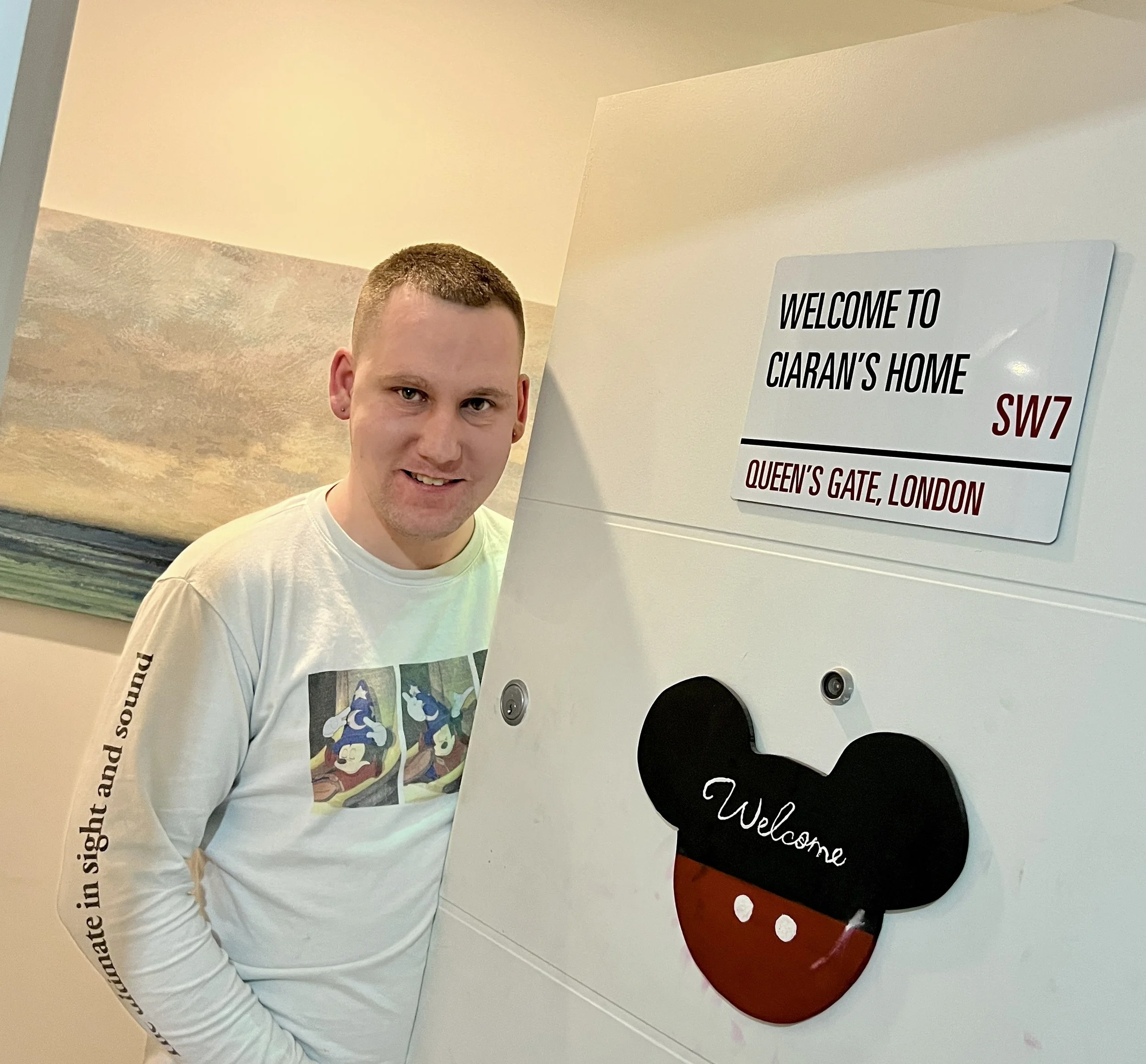
Ciaran opening his own front door
Secondly, whilst being person-centred and meeting outcomes is obviously a great idea (well, not so much the outcomes for me, but paying attention to what is important to me and how I want my life to be going is good), what does George actually mean?
What does being person-centred and meeting outcomes look like to Noah and to Helen?
John O’Brien noticed what we are doing.
“What happens to lots of those words is they become abstract. They are like a balloon that gets blown up with too much helium and starts to float around and sound funny. So, words like person-centred planning have life in some contexts and in some contexts, they’re just filling out a form. And the more intention, mindfulness, is lost from what we’re doing… the more the word floats away, and then it kind of runs out of steam and it’s like a balloon that collapses and falls back to earth.” John O’Brien
Have a read of what Bryony says as she really nails this in her beautiful, ‘words that float away’ blog.
My other story is very personal. I spent some time last weekend sorting out the loft. I know. Having had to clear John Nicoll’s house, I am a tad anxious that no one has to do that for me, and it’s got me in sorting mode. I came across the box that holds all my old mental health notes, and I went down a bit of a rabbit hole. I’ll do another Gloriously Ordinary Sundays blog when I’ve had a bit of time to reflect, but there is one example that pulled me up short.
A letter I received in 2002 when I was 36 years old.
The letter is from a new psychiatrist who was meeting me for the first time to one who had known me for a while. It starts,
Tricia presented as a tall, slightly overweight woman with quite an engaging personality.
It brought me up with a jolt. That is the first sentence he chose to describe me, and there is so much there.
What is the relevance of any of that to my mental health?
What a strange mixture of fact and judgement.
Then I felt embarrassed. Is that what he saw?
I then had a flash of anger. How dare he reduce me to those three observations?
You might be confused about why I’m upset, as I AM tall and ‘quite an engaging personality’ isn’t a heinous observation. I was probably, technically, slightly overweight (ok yeah, on whose scale?). I could contextualise my upset by explaining that I had been hospitalised for anorexia in my twenties and my relationship with food was and continues to be dodgy, but that’s actually not the point. The point is the power he had to choose words for that first sentence he wrote about me, and those are the words he chose. And they are still there on that piece of paper 24 years later.
Lots of you reading this will have the power to write that first sentence about someone. Maybe really notice that power this week as you write?
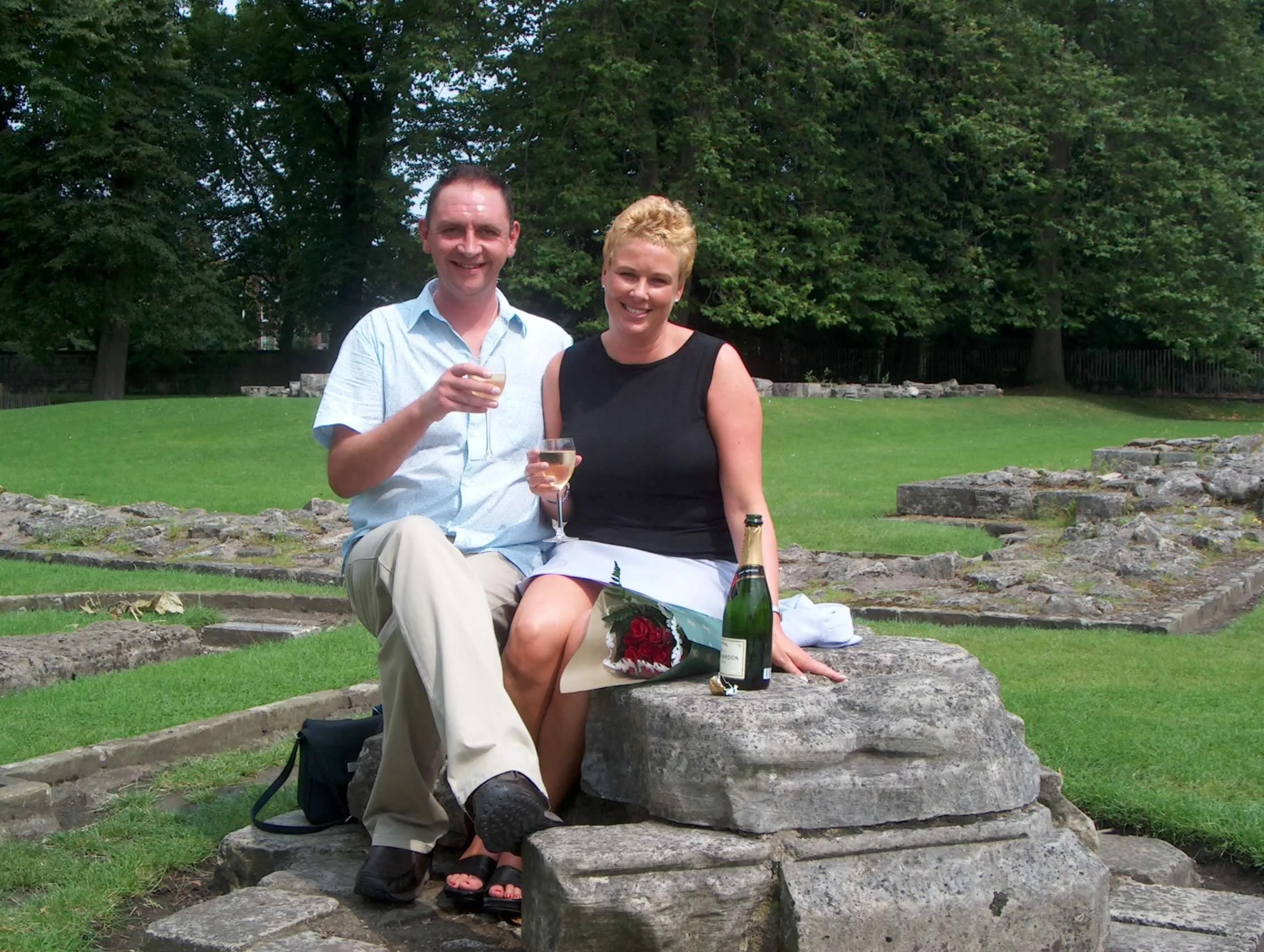
‘Slightly overweight’ Tricia in 2002 just after John Nicoll proposed
The last example I’m just going to share and make no comment.
I received an email last week from a new worker involved in my kids’ lives, getting in touch to introduce themselves. The email heading was, ‘NOK contact’.
Words are powerful. If we choose carefully, they really help us to craft excellent and Gloriously Ordinary support and lives. If we are careless with them, either nothing much changes or we can do some real damage.
Have a great week and get curious about the words you choose to use.